
Pony Car Rebellion: 1964-1975
Nov 14, 2026—Apr 18, 2027
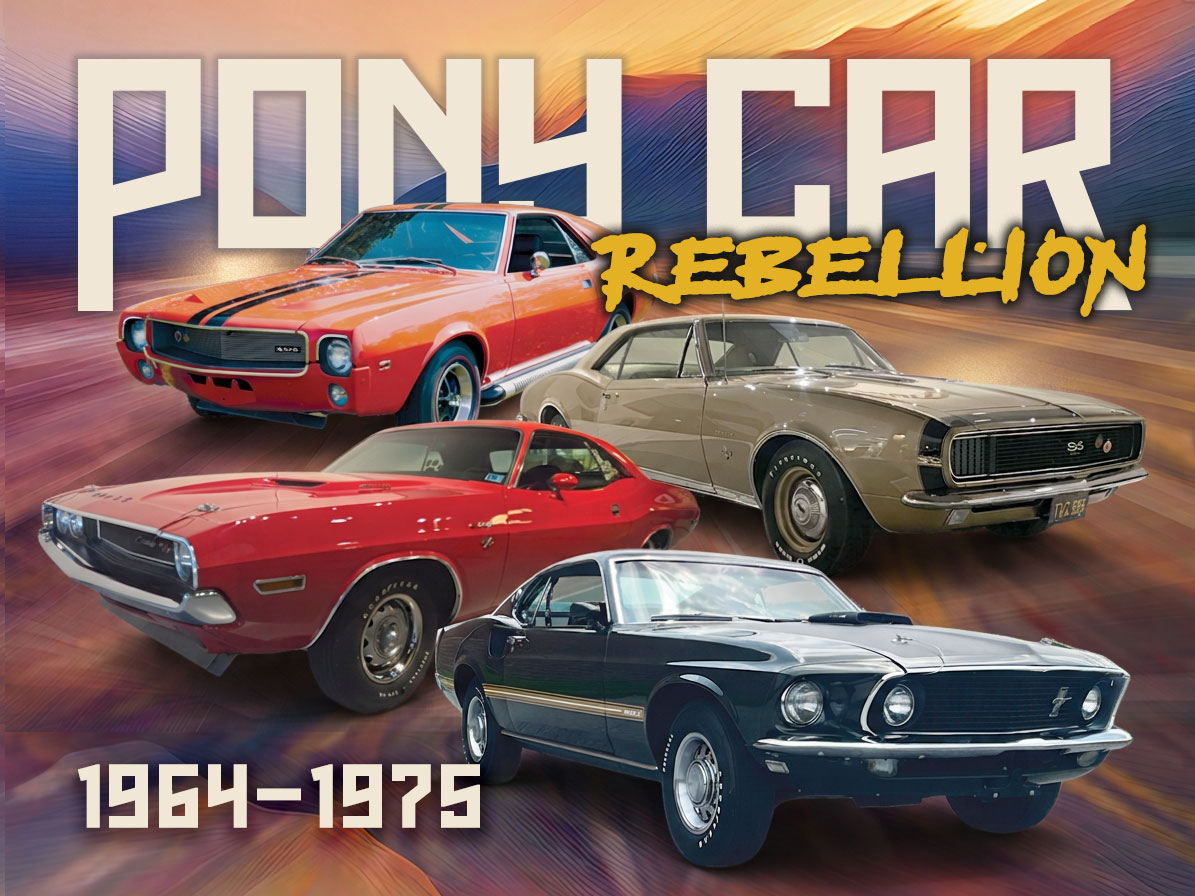
Location: Throughout the Museum
The golden era of pony cars between 1964 and 1975 was shaped by a perfect storm of baby-boomer youth culture, aggressive styling, affordable prices, and fierce manufacturer rivalries. The groundbreaking 1964 launch of the Plymouth Barracuda, followed closely by the Ford Mustang, defined this new automotive segment and gave an entire generation a symbol of freedom and individual expression.
With low-slung bodies, long hoods, short rear decks, and accessible performance, pony cars offered high-octane excitement packaged for the everyday driver. The Plymouth Barracuda actually reached showrooms two weeks before the Mustang, but its limited budget compromised its design and appeal. The Mustang’s runaway success, however, set the template and ignited fierce rivalry among American automakers.
General Motors responded with the Chevrolet Camaro and Pontiac Firebird, while American Motors launched the AMX-Javelin and Chrysler fielded the Dodge Challenger and the reimagined Barracuda. The Mercury Cougar offered a luxury twist on the pony car formula. By the late 1960s, all major U.S. manufacturers had their own versions, and fierce competition even spilled into Trans-Am racing—the so-called “Pony Car Wars.” Pony cars rapidly became cultural icons and drove brand loyalty, especially among young drivers.
By the 1970s, pony cars had grown in size, weight, and price, with powerful V8s and luxury options, but they lost some of their original spirit. Tightening emissions laws, rising insurance costs, and the 1973 oil crisis spelled the segment’s decline. Many models were discontinued or downsized, signaling the end of the classic pony car era. Today, pony cars stand as enduring symbols of American automotive passion, blending style, performance, and cultural impact.
Pony Car Evolution
The Plymouth Barracuda was technically the first pony car, debuting two weeks before the iconic Ford Mustang. However, a limited development budget constrained its design and ultimately limited its popularity, preventing it from achieving the Mustang’s widespread acclaim.
The pony car segment in the U.S. automotive industry began evolving in the mid-1960s, sparked by the Mustang’s success. General Motors initially tried to compete with the Chevrolet Corvair, but after its decline due to handling issues, GM introduced the Chevrolet Camaro and Pontiac Firebird. The Mustang underwent redesigns that influenced the creation of the Mercury Cougar, while American Motors released the Javelin as its entry. The Dodge Challenger, based on the Barracuda, entered the crowded field in 1969.
By the late 1960s, all major American manufacturers were producing pony cars, characterized by long hoods and short decks, appealing to the youth market and fostering brand loyalty. However, sales began to decline after peaking in 1967, dropping from 13% to 9% of the market by 1969. The Mustang’s influence extended overseas, inspiring models like the Ford Capri in Europe and the Toyota Celica in Japan, though no Japanese company produced a true pony car.
In the early 1970s, pony cars grew larger, heavier, and more expensive, with examples like the Dodge Challenger, AMC Javelin, and Ford Mustang increasing significantly in size and weight. Performance improved with big-block V8s, but handling lagged, and stricter emissions controls, higher insurance rates, and changing preferences hurt sales. The 1973 oil crisis further diminished demand for these larger cars, prompting Ford to introduce the smaller Mustang II. By 1975, many original pony cars were discontinued or downsized, signaling the end of the classic pony car era.


